Skip to content

Cart

Your cart is empty

The diamond

Natural · Laboratory grown

Two origins. One carbon.

We set both, and we say which is which. A diamond is a technical object before it is a symbol: it is described, graded and certified. This page explains how.

01

Natural

Crystallised one to three billion years ago, more than a hundred and fifty kilometres below the surface, then carried up by kimberlite pipes. Mined, cut, graded.

An international price index and an established resale value. Each stone carries inclusions that identify it the way a fingerprint does — they are drawn on the report.

Graded by the GIA

Diamonds Graded by GIA
02

Laboratory

Pure carbon crystallised in a few weeks, by chemical vapour deposition (CVD) or under high pressure and high temperature (HPHT). Same composition, same hardness, same refractive index — the same stone, grown differently.

At equal characteristics, a fraction of the price: the carat you were weighing up becomes the carat you can have. The market is recent, so resale value stays low — we say so before you buy.

Graded by the IGI

The report states Laboratory Grown, and the words are laser-inscribed on the girdle of the stone.

The nature of the stone is written on the label, on the invoice and on the certificate. Never in small print.

The grading

The four criteria

Carat, colour, clarity, cut. Four letters that fix the price of a stone — the same four for a natural diamond and for a laboratory-grown one.

Carat

Weight

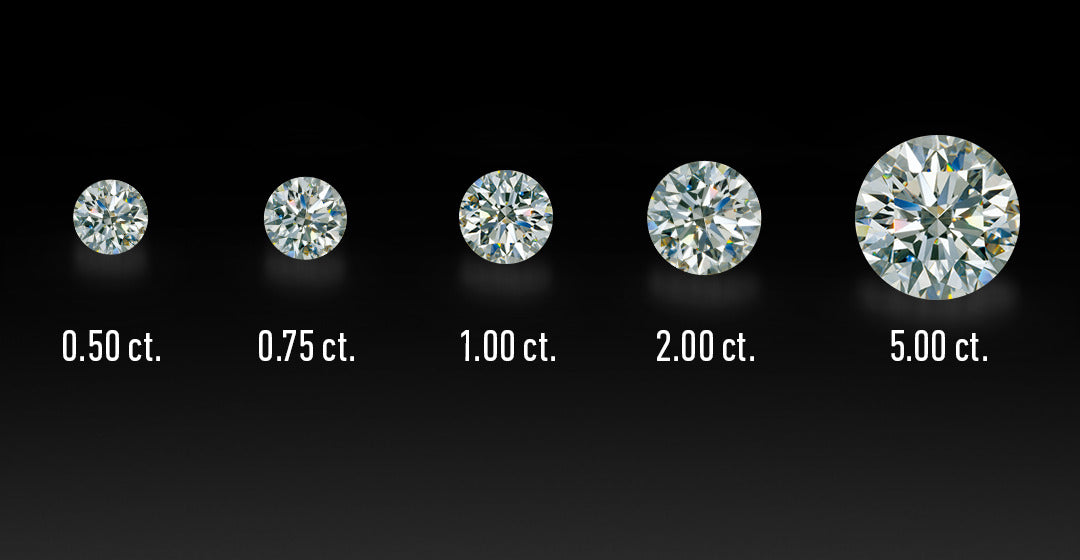
One carat is exactly 0.20 gram. Price does not follow weight in a straight line: it jumps at every round figure, because large stones are rare. A one-carat stone is worth far more than two half-carat stones.

Le poids
Color

Colour

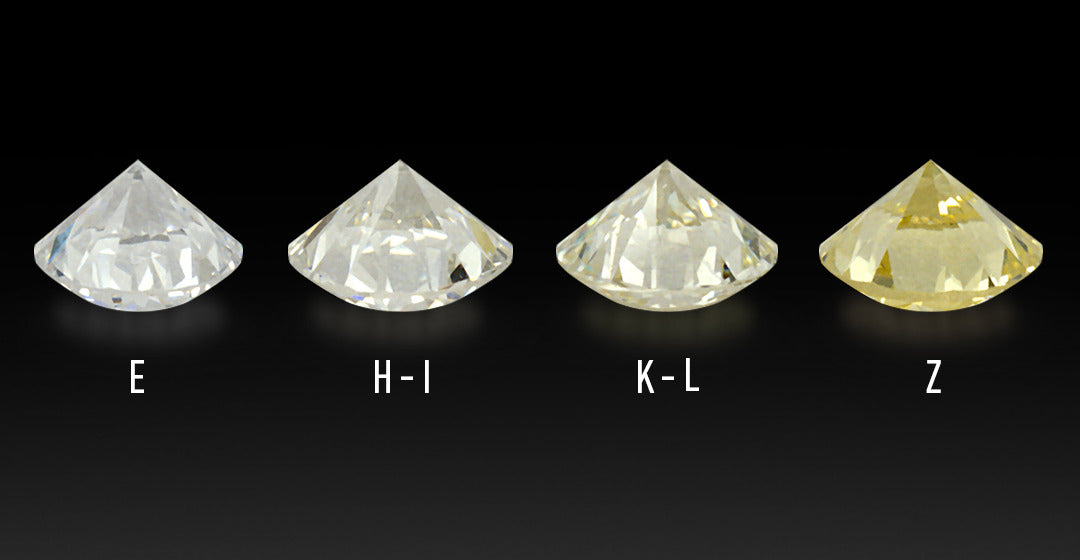
The GIA scale runs from D, exceptional white, to Z, tinted. D to F is colourless; G to J still looks colourless to the naked eye. The least understood price gap sits between those two groups.

La couleur
Clarity

Clarity

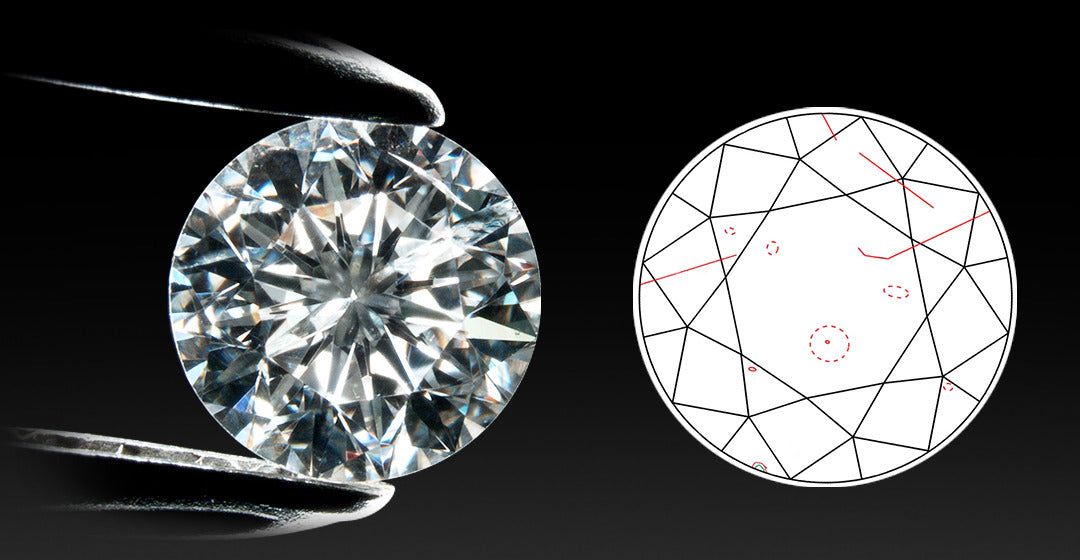
The number, size and position of the inclusions, seen under a ten-times loupe. From IF, flawless, to P3. The laboratory draws their map on the report: that page identifies your stone, and no other.

La pureté
The stone, and the plot of its inclusions
Cut

Cut

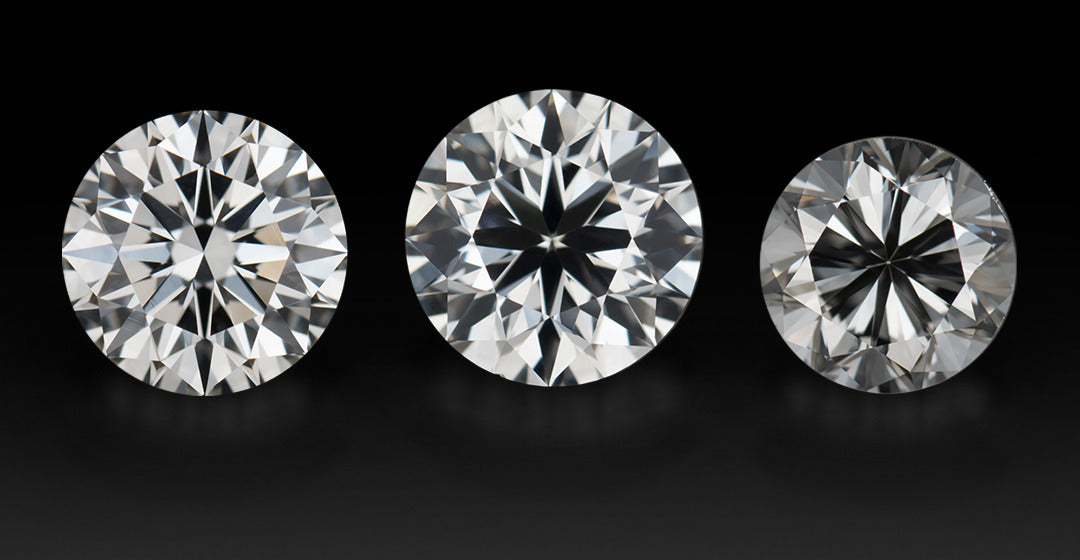
Proportions, angles, polish. It is the only one of the four that depends entirely on the cutter's hand — and the only one that decides whether the stone gives the light back or keeps it. A fine diamond badly cut stays dark.

La taille
Three cuts: on the right, the light no longer comes back

Photographs of the four criteria: Gemological Institute of America.

Certification

Every stone comes with its report

The stone is graded by an independent laboratory that neither owns it nor sells it. Here is one of ours — an actual report, for an actual stone.

IGI Laboratory Grown Diamond Report
IGI Laboratory Grown Diamond Report for one of our stones — 0.50 carat, colour D, clarity VS 2, excellent cut, HPHT growth. The report number, masked on the circulated copy, is laser-inscribed on the girdle of the stone: it is read under the loupe and checked on igi.org.
Open the report

What to read on it

Laboratory Grown Diamond
The nature of the stone, in full words, at the top of the document. No abbreviation, no footnote.
0.50 ct · D · VS 2 · Excellent
The four criteria, graded one by one by the laboratory — not by the seller.
HPHT / CVD
The growth process. High pressure high temperature, or chemical vapour deposition. The report always says which.
Polish · Symmetry · Fluorescence
The detail behind the cut grade, and the proportions diagram that goes with it.
Inscription
The report number, written on the girdle of the stone with a laser. It is read under the loupe, in the shop, in front of you.

Two laboratories, one method

A report carries a number, and that number can be checked by anyone, directly with the laboratory, in a few seconds. Here are the two addresses.

GIA

Gemological Institute of America

Film: Gemological Institute of America — The 4Cs: Cut, 1 min 25, in English.

Founded in 1931. The GIA invented the 4Cs and the D-to-Z colour scale that the whole trade now uses. It is the reference for natural diamonds, and the laboratory whose reports hold their value best on the second-hand market.

What the report carries

  • Shape and cutting style
  • Measurements, in millimetres
  • Carat weight
  • Colour, clarity, cut
  • Polish and symmetry
  • Fluorescence
  • Proportions diagram
  • Clarity plot — the map of the inclusions
Check a GIA report

IGI

International Gemological Institute

Film: International Gemological Institute — IGI explains Lab Grown Diamonds, 1 min 42, in English.

Founded in Antwerp in 1975. The IGI is the laboratory that grades the great majority of the laboratory-grown diamonds in circulation. Its report states the growth method — CVD or HPHT — and never lets the stone pass for a mined one.

What the report carries

  • The words Laboratory Grown
  • Growth method — CVD or HPHT
  • Shape, measurements, carat weight
  • Colour, clarity, cut
  • Polish and symmetry
  • Fluorescence
  • Laser inscription on the girdle
Check an IGI report

The workshop

Wil puts the stones side by side

Thirty-one years at the bench — Boulle, Cartier high jewellery, Montreal, New York. A report is a document; the loupe is the moment you understand what you are buying.

Natural on one side, laboratory grown on the other, under the same light. Then you choose.

Choose the mount, choose the stone.